
Menu
← Circuits

United States · Sears Point

Sonoma Raceway

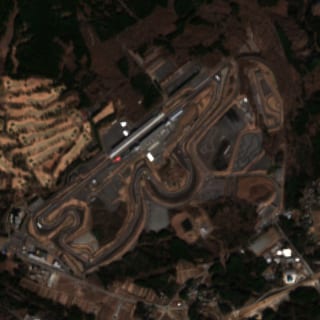
Wine-country road racing over the Sonoma hills: 2.52 miles, 12 turns and 160 feet of rise and fall, from the blind crest at Turn 3a through the Carousel's long left-hand plunge to the hairpin at Turn 11.

Length
4.056 km
2.52 mi
Turns
12
Direction
Clockwise
Elevation change
49 m
160 ft
In use
2002-present

Sonoma Raceway

Sonoma Raceway held its first races over the last weekend of November 1968 as Sears Point Raceway, laid out by Don Boos across 720 acres of hill country at the southern gateway to California wine country. The Grand Prix course packs 12 turns into 2.52 mi (4.056 km) with roughly 160 ft (49 m) of elevation change, and almost none of it is level: the lap climbs from the start/finish straight to a blind crest at Turn 3a, then falls away through the Carousel toward the two hairpins that decide most races here. The venue carried the Infineon Raceway name from 2002 and has been Sonoma Raceway since 2012; Speedway Motorsports has owned it since 1996.

The signature corner is Turn 6, the Carousel: a long, downhill left-hand sweeper of more than 200 degrees with a blind entry, rewarding drivers who surrender just enough speed on the way in to carry momentum down onto the circuit’s longest straightaway. NASCAR bypassed it from 1998 through 2018 via the Chute, an 890-foot connector between Turns 4 and 7, ran the full 2.52-mile Carousel layout from 2019 to 2021, and has raced the shorter Chute configuration since 2022.

Calamity Corner and the Esses

The lap ends at the Turn 11 hairpin, known around NASCAR as Calamity Corner: a 180-degree right-hander where dive-bomb passes and late-race contact are routine. Between the hairpins (Turn 7 is the other prime passing zone) the track rolls through the left-right Esses at Turns 8 and 8a into the fast left at Turn 9 and the quickest corner on the course at Turn 10. The dragstrip alongside has hosted the NHRA annually since 1988 and NASCAR’s Cup Series has raced here every year since 1989 (both series skipped 2020 in the pandemic), while IndyCar visited from 2005 to 2018.

Corner-by-corner

  • T1

    Turn 1

    • Left

    A sweeping uphill left-hander at the end of the start/finish straight, opening the long climb toward the highest part of the road course.

  • T2

    Turn 2

    • Right

    A tight right-hander at the top of the opening climb, reached over a crest that hides the corner; the track levels briefly here before climbing again toward Turns 3 and 3a.

  • T3-3a

    Turns 3-3a

    • Left–right

    A quick uphill left-hander followed by a short climb to Turn 3a, a blind right-hander at the highest point of the road course, regarded by many drivers as the most blind turn NASCAR visits.

  • T4

    Turn 4

    • Right

    A heavy, downhill right-hander that begins the plunge toward the Carousel; on the NASCAR layout the Chute splits off just beyond it at Turn 4a.

  • T5

    Turn 5

    • Right

    A quick right-hander where drivers build speed before the short climb that makes the entry to the Carousel blind.

  • T6

    The Carousel

    • Left

    A long, downhill left-hand sweeper of more than 200 degrees with a blind entry, asking drivers to give up just enough speed on the way in to carry momentum down onto the circuit's longest straightaway.

    The Carousel has anchored the Sears Point lap since 1968. NASCAR bypassed it from 1998 through 2018 using the Chute, an 890-foot connector between Turns 4 and 7, ran the full 2.52-mile Carousel layout again from 2019 to 2021, and has raced the shorter Chute configuration since 2022.

  • T7

    Turn 7

    • Right

    A tight right-hand hairpin at the end of the run down from the Carousel and the track's prime overtaking zone; drivers brake late and hard from near the left-side wall.

  • T8-8a

    The Esses

    • Left–right

    The heart of the Esses, a winding left-right sequence over rolling terrain where rhythm and precision decide how much speed survives to the end of the lap.

  • T9

    Turn 9

    • Left

    A fast left-hand sweep that closes out the Esses and carries the cars toward Turn 10; the Turn 9a chicane on its exit, widened by ten feet in 2012, is used by some configurations rather than the through line.

  • T10

    Turn 10

    • Right

    The fastest corner on the racetrack, a sweeping right-hander that fires the cars toward the braking zone for the final hairpin.

  • T11

    Turn 11

    • Right

    A slow 180-degree right-hand hairpin rounded off by a concrete wall, known in NASCAR circles as Calamity Corner; the field funnels from speed to walking pace before the short run to the line.

    Sonoma Raceway itself bills Turn 11 as "Calamity Corner": dive-bomb passes, aggressive contact and late-race battles are common here, and the hairpin has repeatedly decided the finish of the track's NASCAR races.

  • T12

    Turn 12

    • Left

    A gentle left-hand kink that releases the cars past the pit entrance and onto the start/finish straight.