
Menu
← Circuits

United States · Sebring

Sebring

A WWII bomber base turned 17-turn endurance proving ground: Sebring's abrasive, seam-ridden runway concrete has tortured sports cars in the 12 Hours since 1950, all the way to the signature bumps of Turn 17.

Length
6.019 km
3.74 mi
Turns
17
Direction
Clockwise
In use
1999-present

Sebring International Raceway

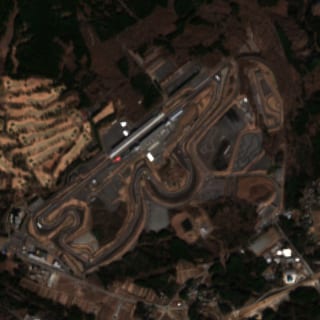
Sebring International Raceway sits on the former Hendricks Field, a WWII heavy-bomber training base near Sebring, Florida. Russian-American aeronautical engineer Alec Ulmann, inspired by the 24 Hours of Le Mans, laid a race course over the old runways and taxiways, and the first event, the Sam Collier Six Hours Memorial, ran on New Year’s Eve, 1950. The Grand Prix Road Course measures 3.74 mi (6.019 km) over seventeen turns, run clockwise, and has hosted the 12 Hours of Sebring, one of the world’s great endurance races, ever since.

The runway surface

Sebring’s defining feature is its surface: long sections of aged, seam-ridden concrete runway spliced with patches of asphalt. The result is famously rough and bumpy, brutal on cars and drivers alike across twelve hours, and it is the reason a Sebring finish is treated as a test of durability as much as speed.

Turn 17: Sunset Bend

The circuit’s identity is its final corner. Universally called “Turn 17,” Sunset Bend is a long, extremely bumpy high-speed right-hander wide enough to run cars three abreast, named for the setting sun drivers face here late in the race. Carrying speed through its battered concrete and onto the front straight is the single hardest thing to get right at Sebring, and a clean Turn 17 can define a lap or a stint.

A lap of legends

The lap reads like a roll-call of sports-car history: Gurney Bend (Turn 6), the slow Hairpin (Turn 7), the flat-out Fangio chicane (Turns 8–9), Cunningham Corner (Turn 10), Collier Curve (Turn 11), the bumpy Tower Turn (Turn 13), the intimidating off-camber Bishop Bend (Turn 14), Gendebien Bend (Turn 15), and the lap-critical Le Mans Corner (Turn 16) that opens onto the back straight. Most are named for drivers, owners, and founders who shaped the 12 Hours.

Corner-by-corner

  • T1

    Turn 1

    • Left

    A blind, bumpy high-speed left-hander immediately off the start/finish straight, taken with a high minimum speed; one of the most important corners for lap time and a corner that sets the tone for the whole lap.

    Turn 1 plunges into the old airfield over the abrasive, seam-ridden concrete that defines Sebring. Run flat-out and nearly blind on entry, it rewards commitment over a surface that has punished sports cars in the 12 Hours since 1950, and is one of the corners the circuit is best known for.

  • T2

    Turn 2

    • Right

    A short right-hand kink on the chute out of Turn 1, used to set up the entry to Turn 3; in most cars little more than a brief direction change.

  • T3

    Turn 3

    • Left

    A tighter, low-speed left-hander with grip on entry, beginning the technical infield section.

  • T4

    Turn 4

    • Right

    A brief right-hand transition between Turn 3 and Turn 5, effectively a throwaway corner used to position the car for the long left that follows.

  • T5

    Turn 5

    • Left

    A long, off-camber, low-to-medium-speed left-hander taken with a late apex, critical because it opens onto a long straight.

  • T6

    Gurney Bend

    • Right

    A long, very fast sweeping right-hander, flat-out or nearly so in most cars; long known as Big Bend, it was renamed Gurney Bend in 1996 for Dan Gurney, the 1959 winner.

  • T7

    Hairpin

    • Right

    The slowest corner on the circuit, a tight right-hand hairpin reached over a bumpy braking zone and demanding heavy trail-braking.

  • T8

    Fangio Chicane

    • Right

    The right-hand half of the flat-out Fangio chicane, named for Juan Manuel Fangio, who won the 12 Hours in 1956 and 1957.

  • T9

    Fangio Chicane

    • Left

    The left-hand half of the Fangio chicane, taken at full throttle and completing the flick before the run to Cunningham Corner.

  • T10

    Cunningham Corner

    • Right

    A medium-low-speed right-hander offering more than one line, feeding into the long left of Collier Curve; named for three-time winning team owner Briggs Cunningham.

  • T11

    Collier Curve

    • Left

    A long, full-throttle left-hander named for Sam Collier, the racer killed at Watkins Glen months before Sebring's first race and honored in the inaugural event's name.

  • T12

    Turn 12

    • Right

    A right-hand kink taken at speed on the run from Collier Curve toward Tower Turn.

  • T13

    Tower Turn

    • Right

    A tight, bumpy second-gear right-hander beneath the circuit's tower, leading onto a longer straight; named for the tower it passes.

  • T14

    Bishop Bend

    • Left

    A fast, off-camber left-hand bend taken nearly flat, regarded as one of the most intimidating corners on the lap; named for IMSA founder John Bishop.

  • T15

    Gendebien Bend

    • Right–left

    A high-speed right-then-left sweeper named for Olivier Gendebien, the only driver to win the 12 Hours three years running (1959–1961).

  • T16

    Le Mans Corner

    • Right

    A medium-speed right-hander that is the most important corner for lap time as it opens onto the back straight; named in tribute to the 24 Hours of Le Mans that inspired the 12 Hours of Sebring.

  • T17

    Sunset Bend

    • Right

    Sebring's signature final corner: a long, extremely bumpy high-speed right-hander wide enough to run cars three abreast, where exit speed onto the front straight defines the lap.

    Universally known simply as "Turn 17," Sunset Bend is the corner Sebring is most identified with. The name comes from the setting sun drivers face here late in the 12 Hours, and the brutal seams of the old runway concrete make its long right-hand sweep one of the hardest corners in sports-car racing to figure out and to execute cleanly.