

Autódromo José Carlos Pace
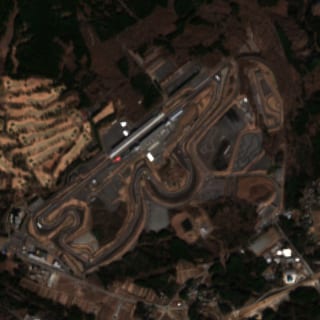
The Autódromo José Carlos Pace, universally known as Interlagos, after the São Paulo district between two reservoirs where it was built, opened in 1940 and has hosted the Brazilian Grand Prix almost every year since 1973. Originally named for that “between the lakes” setting, the circuit was renamed in 1985 for José Carlos Pace, the Brazilian who won his home Grand Prix here in 1975 and died in a plane crash in 1977. The modern Grand Prix course measures 2.677 mi (4.309 km) over fifteen turns and, unusually, runs anticlockwise. Packed into that short lap is about 141 ft (43 m) of elevation change, and the constant up-and-down over an old, bumpy surface makes it one of the most physically demanding and atmospheric tracks in Formula 1.
The Senna S
The circuit’s identity is the S do Senna at Turns 1–2, a fast downhill left-right plunge off the long start/finish straight to one of the lowest points of the lap. Named for São Paulo’s own three-time world champion Ayrton Senna, it is the prime overtaking zone, a regular first-lap flashpoint, and the corner the track is most recognised for. Its exit feeds the long left of Curva do Sol (Turn 3), which launches the cars down the Reta Oposta back straight.
Descent to the lake and the climb to the line
From Curva do Sol the lap plunges through the Descida do Lago (Turns 4–5) toward the lake, sweeps the downhill Ferradura horseshoe (Turns 6–7), and threads the slow, twisting infield (Laranjinha, Pinheirinho, the Bico de Pato “duck’s bill” (Turn 10) and Mergulho) down to Junção (Turn 12). That left-hander at the lowest point of the circuit is the most critical corner on the lap: its exit begins the long, full-throttle uphill climb past the grandstands all the way back to the line. It was at Junção in 2008 that Lewis Hamilton passed Timo Glock on the final lap to take his first world title by a single point. Valtteri Bottas set the Formula 1 race lap record here in 2018 at 1:10.540 for Mercedes.